The Second-City Pivot: Why 2026 is the Year of the Alternative Destination
Ditch the overtourism of capital cities. Discover why 'second cities' and regional hubs offer better value, deeper culture, and a more authentic travel experience.
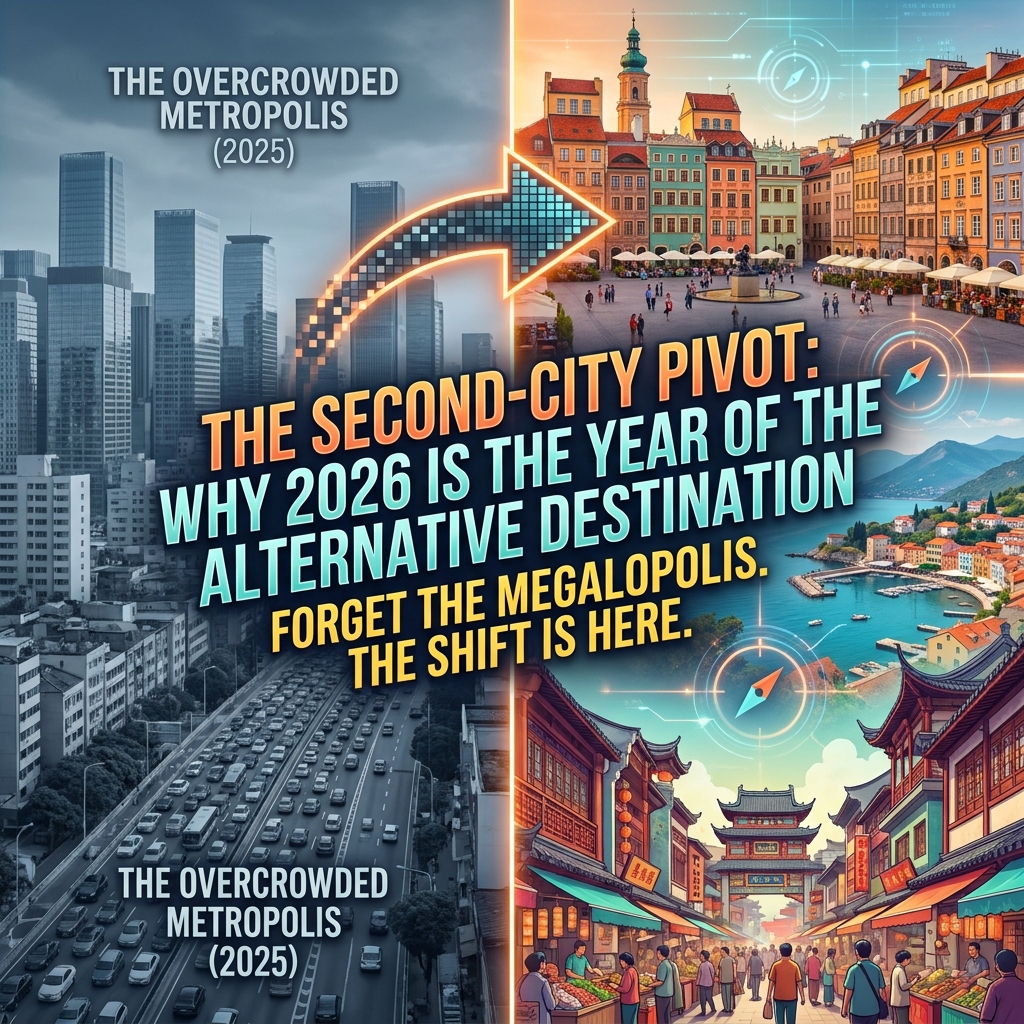
Travel has reached a saturation point. In 2026, the traditional bucket list is no longer a badge of honor; it is a recipe for long lines, inflated prices, and a sanitized version of local culture. When everyone follows the same viral TikTok recommendation to a specific cliffside in Amalfi or a specific street in Kyoto, the very magic that made those places special evaporates.
The most sophisticated travelers are now executing what we call the "Second-City Pivot." Instead of booking the capital city or the primary tourist hub, they are looking 100 miles to the left or right. They are finding the cities that locals love—places with thriving arts scenes, authentic culinary traditions, and a cost of living that doesn't feel like a robbery. This isn't just about saving money; it is about reclaiming the sense of discovery that travel is supposed to provide.
The Problem with the Primary Destination
Primary destinations—the Londons, Parises, and Tokyos of the world—are becoming victims of their own success. Overtourism has led to restrictive entry fees, the "Disneyfication" of historic centers, and a resentment from local populations that can make visitors feel unwelcome. When you choose hidden gems in Europe, you aren't just avoiding crowds; you are supporting a more sustainable ecosystem of tourism that distributes wealth to regions that actually benefit from your presence.
In these secondary hubs, the "tourist trap" barely exists. You aren't being ushered into a restaurant with a picture menu in five languages. Instead, you are sitting at a neighborhood bistro where the menu changes daily based on what was at the market that morning. This shift requires a change in mindset. You have to stop viewing travel as a checklist of monuments and start viewing it as an immersion into a different rhythm of life.
How to Identify a High-Value Second City
Finding these locations requires looking beyond the algorithm. If a place is trending on the front page of a major travel booking site, you might already be too late for the "hidden" phase. To find the next great destination, look for these three indicators:
Strong University Presence
Cities with major universities often have a vibrant, youthful energy, affordable nightlife, and a high density of "third spaces" like cafes and libraries. These cities remain active year-round, not just during the peak summer months.
Regional Transit Hubs
Look for cities that serve as a rail or bus hub for their province but aren't the final stop for international flights. These cities often have the infrastructure of a major metropolis but a fraction of the international foot traffic.
The 'Creative Class' Migration
When artists and chefs are priced out of the capital, where do they go? Look for the cities where the local creative class is moving. This often signals a burgeoning gallery scene and a progressive food culture that hasn't yet been commodified for tourists.
Concrete Examples of the Pivot
To put this into practice, consider these specific pivots for your next adventure. If you were thinking about the Mediterranean, don't just default to the usual suspects. You can find incredible, underrated places to live inexpensively in Europe by looking at cities like Thessaloniki instead of Athens, or Valencia instead of Barcelona.
Instead of Lisbon, try Coimbra
While Lisbon struggles with the weight of its popularity, Coimbra offers a deep dive into Portuguese history with its stunning university (one of the oldest in the world) and a hauntingly beautiful Fado tradition that feels far more intimate than the commercial shows in the capital.
Instead of Venice, try Trieste
Trieste sits at the crossroads of Latin, Slavic, and Germanic cultures. It has the grand coffee house culture of Vienna and the coastal beauty of the Adriatic, but without the cruise ship crowds that make Venice feel like a theme park. It is also one of the best cities to settle in the Mediterranean if you are looking for a base that balances work and leisure.
Mastering the Counter-Seasonal Strategy
Timing is just as important as location. To truly experience a hidden destination, you must apply a counter-seasonal travel strategy. Visiting a secondary city during its shoulder season—think October in the Balkans or April in the Baltics—provides a level of quietude that is impossible to find in July.
This approach also allows for better geoarbitrage. Your money goes significantly further when you aren't competing with peak-season demand. This is particularly relevant for digital nomads or long-term travelers who need to maintain a budget while seeking high-quality infrastructure. By choosing developed and cheap countries, you can enjoy high-speed internet and modern amenities in a city that most tourists couldn't point to on a map.
The Logistics of the Unknown
Traveling to less-documented areas requires a slightly higher level of competence. You won't find 5,000 TripAdvisor reviews for every cafe. This is where strategic travel hacks come into play.
- Use Local Language Apps: Don't rely on everyone speaking English. Even a basic grasp of the local tongue opens doors that remain closed to the average tourist.
- Download Offline Maps: Second cities can have winding layouts that Google Maps might struggle with in low-signal areas.
- Prioritize Security: Smaller cities are often safer than capitals, but being a pioneer means you should still perform a digital nomad safety audit to ensure your data and devices are protected while using public Wi-Fi in unfamiliar hubs.
Why This Matters for the Future of Travel
The pivot to hidden destinations isn't just a trend; it's a necessity. As global wealth increases and more people gain the ability to travel, the pressure on "Must-See" landmarks will become unbearable. By choosing the path less traveled, you are participating in a more ethical form of tourism. You are helping to prevent the destruction of heritage sites and ensuring that the economic benefits of travel are shared by a wider variety of communities.
Furthermore, the psychological rewards are higher. There is a specific type of dopamine hit that comes from discovering a plaza, a view, or a meal that hasn't been spoiled by a thousand identical Instagram posts. It builds a sense of self-reliance and curiosity that the packaged holiday simply cannot match.
FAQ
Is it safe to travel to cities that aren't major tourist hubs?
Generally, yes. Second cities often have lower crime rates than major capitals because they aren't targeted by the professional pickpockets and scammers who prey on tourists. However, you should always research local customs and maintain the same level of situational awareness you would anywhere else.
Will I face a significant language barrier in hidden destinations?
In many secondary cities, especially university towns, younger generations speak excellent English. In more remote areas, you may need to rely on translation apps and non-verbal communication. Most travelers find that locals in these areas are more patient and appreciative of your efforts to visit their home.
Are hidden destinations harder to get to?
You may need to take a regional train or a domestic bus rather than a direct flight. However, this extra step is exactly what keeps the crowds away. The "friction" of the journey is the filter that ensures only the most intentional travelers arrive, preserving the destination's authentic character.