The Post-Macro Era: Why Nutrient Density and Timing Outperform Calorie Counting
Move beyond basic macros. Learn how nutrient density and precision timing can transform your energy, metabolic health, and longevity without restrictive dieting.
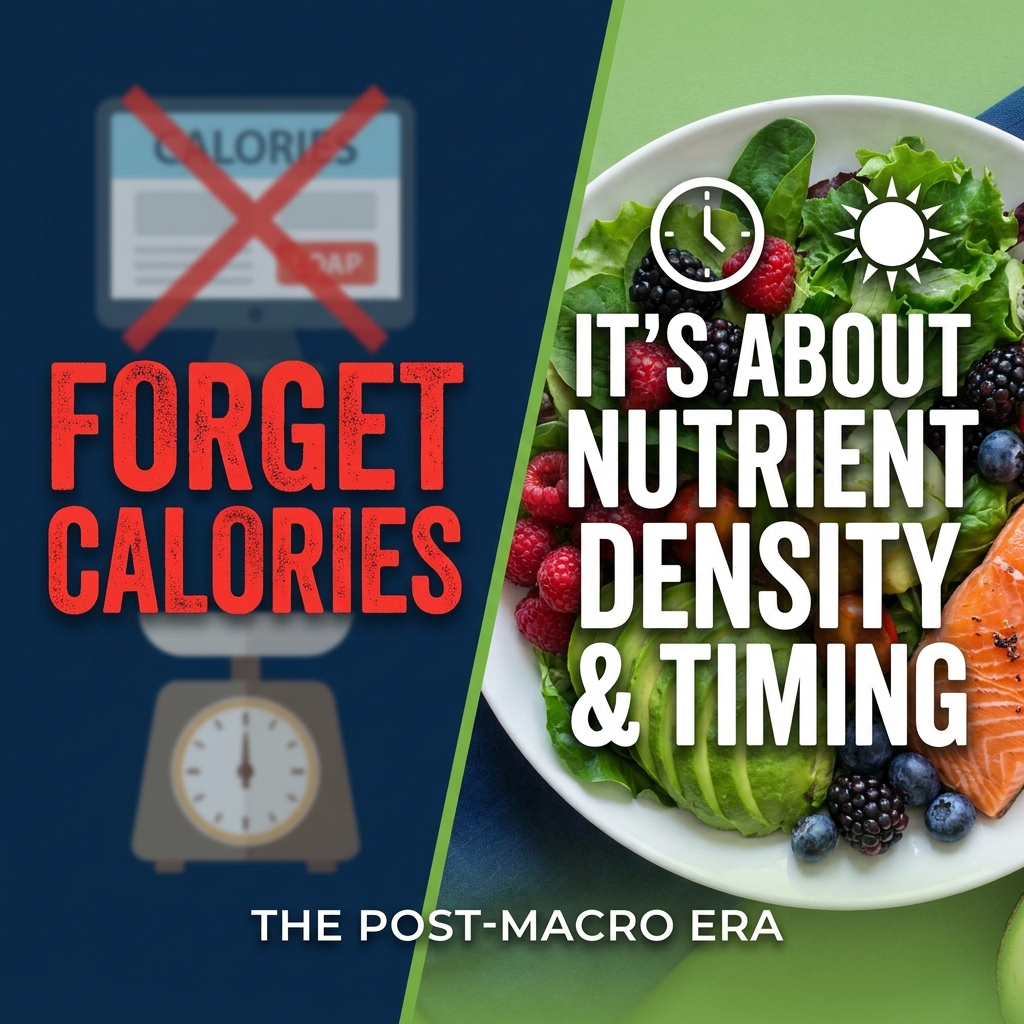
For decades, the gold standard of nutrition was a simple math problem: calories in versus calories out. If the numbers balanced, you were healthy. Then came the "macro" era, where we obsessed over the ratio of proteins, fats, and carbohydrates. But as we move further into 2026, the scientific community is acknowledging a more nuanced reality.
You can hit your daily calorie target and perfect your macros while remaining functionally malnourished. The future of eating isn't about restriction; it is about high-resolution nutrition—focusing on nutrient density, bioavailability, and the strategic timing of when those nutrients hit your bloodstream.
The Fallacy of the Empty Macro
Standard nutrition labels tell a partial story. They highlight the fuel (calories) but ignore the biological software (micronutrients) required to process that fuel efficiently. Two hundred calories of processed white bread and two hundred calories of wild-caught salmon may share a similar caloric profile, but they trigger vastly different hormonal responses.
Focusing solely on weight can be a dangerous distraction. Many people who appear healthy on the outside are struggling with internal metabolic dysfunction. This is a core reason why even fit people are at risk of a heart attack; their systemic inflammation and lipid profiles are often driven by poor nutrient quality rather than a lack of exercise.
To optimize for the long term, we must shift toward preventive care longevity systems. This means prioritizing foods that offer the highest concentration of vitamins, minerals, and phytonutrients per calorie.
Bioavailability: It’s Not Just What You Eat
Nutrition isn't just about what you swallow; it’s about what you absorb. Bioavailability refers to the proportion of a nutrient that enters the circulation and is able to have an active effect.
For example, the iron found in spinach (non-heme iron) is significantly less bioavailable than the iron found in beef (heme iron). To unlock the nutrients in plant sources, you often need specific pairings. Vitamin C increases iron absorption, while healthy fats are required to absorb fat-soluble vitamins like A, D, E, and K.
If you are eating a salad with fat-free dressing, you are essentially flushing away the very nutrients you’re trying to consume. True health comes from small lifestyle changes for better health, such as adding a splash of olive oil or half an avocado to your greens to ensure those micronutrients actually reach your cells.
The Role of Micronutrients in Metabolic Health
Micronutrients act as cofactors for enzymes. Without magnesium, your body cannot efficiently produce ATP (energy). Without zinc, your immune system and testosterone production stall. When these are missing, the body remains in a state of "hidden hunger," driving you to overeat because your cells are literally starving for minerals despite an abundance of calories.
Nutrient Timing and Circadian Biology
In 2026, we understand that our bodies process nutrients differently depending on the time of day. This is linked to our circadian rhythm—the internal clock that regulates everything from body temperature to insulin sensitivity.
Insulin sensitivity is typically highest in the morning and lowest in the evening. This means your body is better equipped to handle carbohydrates early in the day. Consuming a large, carb-heavy meal late at night can lead to prolonged glucose elevation, which interferes with sleep quality and fat oxidation.
Aligning your eating window with your natural light-dark cycle is part of a biological clock reset. By front-loading your calories and tapering off as the sun goes down, you support your body’s natural repair processes during sleep.
Achieving Metabolic Flexibility
A primary goal of modern nutrition is achieving metabolic flexibility. This is the body’s ability to efficiently switch between burning carbohydrates and burning stored body fat.
Constant snacking, especially on high-sugar foods, keeps insulin levels chronically elevated. This locks the door to your fat stores. By focusing on nutrient-dense whole foods and implementing strategic periods of digestive rest, you train your mitochondria to become dual-fuel engines. This leads to steady energy levels throughout the day and eliminates the "afternoon slump."
Actionable Steps for a High-Resolution Diet
Transitioning from a calorie-counting mindset to a nutrient-density mindset doesn't have to be overwhelming. Start with these three pillars:
- Prioritize Protein Quality: Aim for 1.2 to 1.6 grams of protein per kilogram of body weight. Focus on sources that provide a complete amino acid profile and high bioavailability, such as eggs, grass-fed meats, and fermented soy.
- The "Half-Plate" Fiber Rule: Fill half your plate with colorful, non-starchy vegetables at every meal. The fiber acts as a buffer, slowing the absorption of glucose and feeding your gut microbiome.
- Hydrate at the Cellular Level: Water alone isn't always enough. For optimal function, you need electrolytes to pull that water into your cells. This is the core of cellular hydration strategies, which can drastically improve cognitive clarity and physical performance.
The Psychological Shift: Beyond the Scale
When you focus on nourishing your body rather than restricting it, your relationship with food changes. You stop viewing meals as "cheats" or "sins" and start seeing them as data and fuel. This psychological shift is essential for sustainability.
Instead of a frantic search for the latest fad, look for a daily wellness routine for busy people that integrates these principles seamlessly. Consistency in nutrient density will always outperform intensity in short-term dieting. By feeding your body what it actually needs, you reduce the biological drive for cravings, making healthy choices feel like a natural preference rather than a chore.
Frequently Asked Questions
Can I still eat processed foods if I hit my nutrient targets?
While the occasional processed treat won't ruin your health, these foods often contain "anti-nutrients" or inflammatory oils that can interfere with the absorption of the good stuff. Think of them as high-noise, low-signal foods. The goal is to keep the majority of your intake focused on whole, single-ingredient sources to maintain metabolic clarity.
How do I know if I am nutrient deficient without a blood test?
Common signs include persistent fatigue despite sleeping, brittle nails, thinning hair, frequent brain fog, and intense cravings for specific foods (like chocolate for magnesium). However, if you suspect a serious deficiency, a micronutrient panel is the most reliable way to get an objective look at your status.
Is breakfast really the most important meal for metabolic health?
It depends on the individual, but for most people, a high-protein breakfast is a game-changer. It stabilizes blood sugar for the rest of the day, reducing the likelihood of evening overeating. If you choose to skip it, ensure your first meal of the day is exceptionally nutrient-dense to compensate for the shortened feeding window.