The Toddler Autonomy Shift: Transforming Power Struggles Into Cooperation
Tired of daily battles over shoes and snacks? Discover how to leverage toddler psychology to turn power struggles into moments of growth and cooperation.
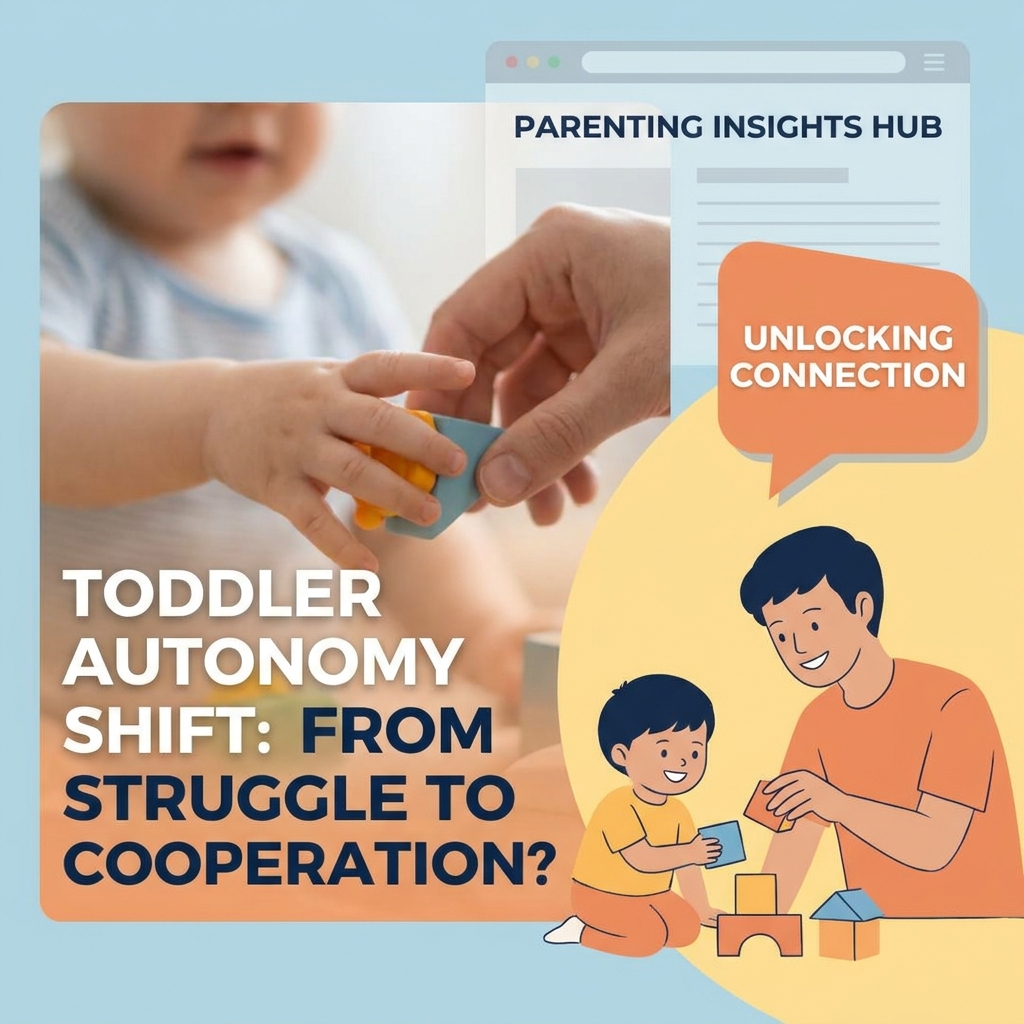
If you have spent any time with a two-year-old recently, you have likely encountered "The Standoff." It usually happens over something trivial: a blue cup instead of a red one, the audacity of a jacket during a snowstorm, or the wrong way to slice a banana.
For many parents, these moments feel like defiance. But in the world of toddler development, these aren't acts of rebellion; they are the first sparks of human autonomy. The challenge is that most of our traditional parenting instincts—leaning into control and authority—actually fuel the fire. To raise a child who is confident and capable, we have to move away from the winner-takes-all mentality and embrace a new framework: the Autonomy Shift.
Understanding the Need for Control
Between the ages of 18 months and four years, a child’s brain undergoes a massive structural reorganization. They are moving from a state of total dependence to realizing they are a separate entity from their parents. This realization is exhilarating and terrifying for them. They test boundaries not to make you late for work, but to see where they end and the world begins.
When we respond with rigid control, we often trigger a survival response. This is why strict parenting often creates sneaky kids; if a child feels their autonomy is constantly threatened, they learn to bypass the truth to maintain a sense of agency. Instead of seeing these moments as a threat to your authority, view them as a developmental milestone that requires a different set of tools.
The Architecture of Cooperation
Cooperation is not the same as obedience. Obedience is doing what you are told because you fear the consequences; cooperation is choosing to work together because you feel respected and understood. To build this, we have to address the autonomy gap by shifting our role from a commander to a coach.
1. The Power of Micro-Choices
One of the simplest ways to satisfy a toddler’s hunger for power is through limited choices. Instead of asking, "Do you want to get dressed?" (to which the answer is always no), try, "Do you want to wear the striped shirt or the dinosaur shirt?"
This gives the child a win. They feel in control of their body and their environment, while the ultimate goal—getting dressed—is still achieved. This is a foundational element of building what experts call the competence-confidence loop, where the child sees that their decisions lead to successful outcomes.
2. Validation Before Correction
When a toddler is screaming because they can't have a second cookie, our instinct is to explain why they can't have it. Logic, however, is a late-blooming cognitive skill. Before you correct the behavior, validate the emotion. "You really wanted that cookie. It's hard when we have to stop eating treats." When a child feels heard, their nervous system relaxes, making them more receptive to boundaries.
Building Predictability Through Routines
Toddlers thrive on predictability because it makes a chaotic world feel safe. When a child knows what comes next, they don't have to fight for control. This is where the micro-routine manifesto becomes your best friend.
Small, repeatable "anchor habits"—like a specific three-step sequence for bedtime or a special song for clean-up time—reduce transition anxiety. Transitions are the most common trigger for power struggles. By using a routine, the "boss" isn't the parent; the "boss" is the schedule. It removes the personal conflict from the equation.
The Language of Growth
The words we use during these formative years become the internal monologue of the child. If we constantly focus on what they are doing wrong, we risk damaging their sense of self. Research suggests that the 6 phrases that shape a child's brain are those that emphasize effort and process over innate ability or blind compliance.
Instead of saying "Good boy/girl," try:
- "I see how hard you're working on that tower."
- "You figured out how to put your shoes on by yourself!"
- "Thank you for being a helper; that made our morning much smoother."
These phrases reinforce the idea that they are capable individuals. When a child feels capable, they are less likely to act out to prove their power.
Avoiding the Safety Trap
Sometimes, in our quest for a peaceful household, we unintentionally create an environment where the child feels they cannot fail. While we aim to be loving, it is important to realize that why kids can feel unsafe even around loving parents often stems from an inconsistency in emotional safety. If a child feels they have to be "perfect" to receive affection, they will stop taking risks.
True safety comes from knowing that even when they mess up, their relationship with you is secure. This is the core of an emotional safety audit. Regularly check in: Are you reacting to their behavior, or are you responding to their needs? Are you creating a space where they can be "bad" at something while they learn to be good at it?
Practical Steps for Tomorrow Morning
To move from theory to practice, try these three adjustments during your next high-stress toddler moment:
- Stop and Drop: When you feel a power struggle brewing, stop talking. Drop down to their eye level. Physical proximity and a calm presence can de-escalate a situation faster than any lecture.
- The "Yes" Buffet: Look for ways to say yes. "Yes, we can go to the park as soon as we put the toys away." "Yes, you can have a snack after we finish our errand." This shifts the dynamic from a series of denials to a series of goals.
- Narrate the Win: When they do cooperate, notice it out loud. "You remembered to put your bowl in the sink without me even asking! That was so helpful."
By focusing on these small shifts, you aren't just surviving the toddler years; you are laying the groundwork for a relationship built on mutual respect. You are teaching them that they have a voice, and more importantly, that their voice matters.
FAQ
How do I handle a public tantrum without giving in?
Public tantrums are a test of the parent's ego, not the child's behavior. The best approach is to remain calm and, if necessary, physically move the child to a private space (like your car or a quiet corner). Do not try to reason with them mid-meltdown. Once they are calm, you can address the issue. Giving in to the demand only teaches them that tantrums are an effective negotiation tool.
Is it okay to let my toddler fail at a task?
Yes. In fact, it is necessary. If you always step in to fix the puzzle or zip the coat, you are teaching them that they are incompetent. Allow them to struggle (safely) and offer support only when they ask for it or reach a point of total frustration. This builds resilience and problem-solving skills.
What if my toddler refuses every choice I give them?
If "Option A or Option B" results in an "Option C: Scream," it's time to set a firm boundary. You can say, "I see you're having trouble choosing. If you can't pick between the blue or red cup, I will pick one for you today so we can keep moving." Follow through calmly. You are showing them that while they have choices, the world doesn't stop because they refuse to make one.