The Slow Nomad Manifesto: Why Deep Travel is the Secret to Remote Work Longevity
Ditch the passport-stamping race. Learn how the slow nomad movement is curing remote work burnout and building sustainable, long-term global lifestyles.
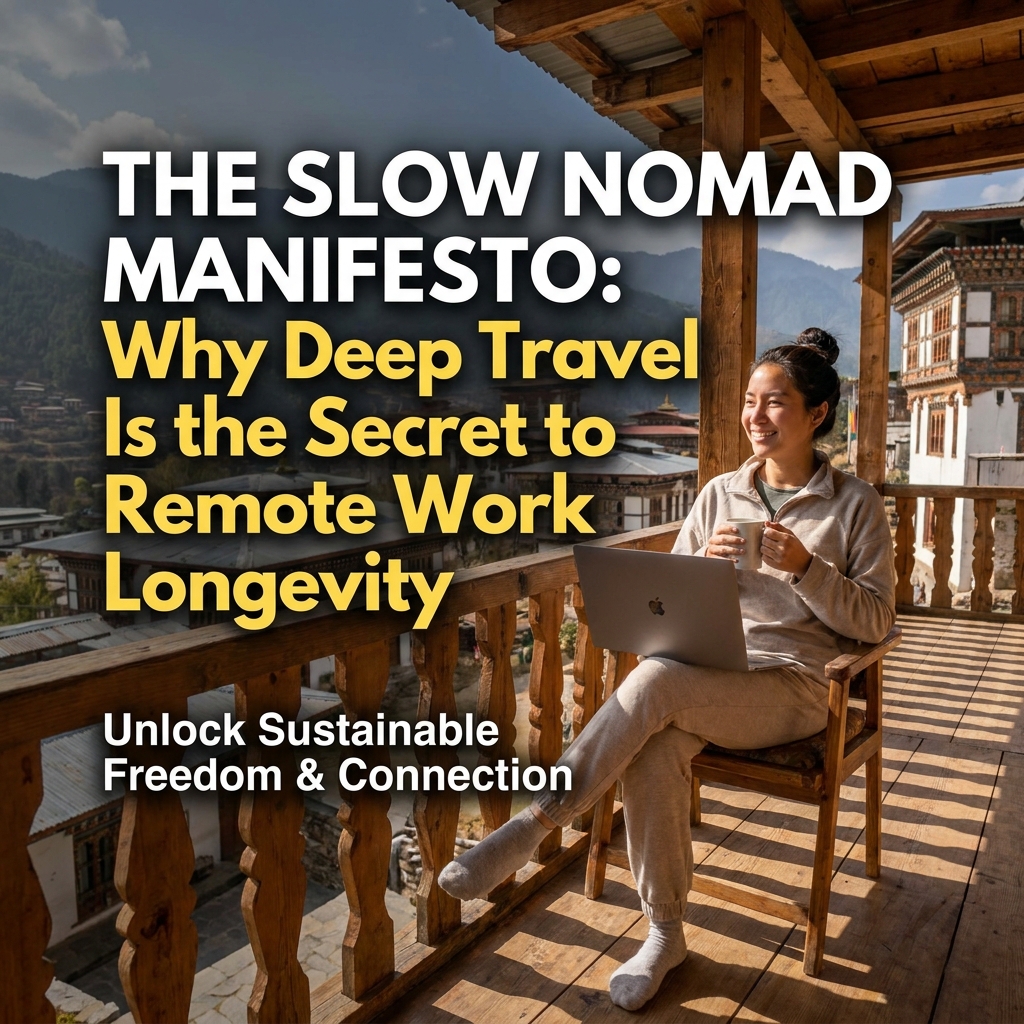
The era of the 'laptop on a beach' postcard is officially over. By 2026, the first wave of digital nomads has realized a harsh truth: hopping between five countries in five months is a fast track to professional burnout and emotional exhaustion. The constant logistics of finding reliable Wi-Fi, navigating visa renewals, and scouting new grocery stores creates a cognitive load that kills creativity.
Enter the Slow Nomad Manifesto. This isn't just about traveling; it's about residency without permanence. It’s a shift from being a tourist with a job to being a temporary local. By spending three to six months in a single location, you unlock a level of productivity and cultural depth that the weekend-warrior nomad can never access.
The High Cost of Hyper-Mobility
When you move every two weeks, you are in a perpetual state of 'onboarding.' Every ounce of your willpower is spent on basic survival: Where is the gym? Which SIM card works? How do I use this washing machine? This exhaustion is what seasoned travelers call 'decision fatigue.'
Sustainable digital nomadism requires a stable foundation. When you stay longer, you transition from a consumer of experiences to a participant in a community. You move beyond the surface-level attractions and begin to understand the local economy, the morning rituals of your neighborhood, and the nuances of the culture. This stability is the bedrock of Solo Travel Mastery: The Radical Independence Strategy for 2026, where the goal is self-reliance through familiarity rather than constant novelty.
Designing Your Anchor Points
To succeed as a slow nomad, you need to establish 'anchor points'—non-negotiable habits and infrastructures that remain consistent regardless of your coordinates. These anchors prevent the 'floating' sensation that leads to nomad depression.
1. The Professional Sanctuary
Stop working from cafes with unstable stools and loud espresso machines. A slow nomad invests in a dedicated workspace. This might mean renting a two-bedroom apartment where one room is a dedicated office or joining a high-end coworking space. Consistency in your physical environment signals to your brain that it is time to produce, not just browse.
2. The Routine Replication
Your morning routine should look the same in Lisbon as it does in Seoul. Whether it’s a specific type of coffee or a 20-minute yoga flow, these micro-habits ground you. Maintaining a High-Performance Morning Aesthetic: Why Visual Order Drives Cognitive Clarity ensures that your brain isn't overstimulated by new surroundings before you’ve even finished your first task.
3. Social Integration
Join a local hobby group that has nothing to do with tech or remote work. Whether it’s a Jiu-Jitsu gym, a pottery class, or a community garden, these spaces provide the social 'third place' that prevents the isolation often felt in the nomad community.
The Strategic Advantage of Geoarbitrage
Slow nomadism isn't just a mental health play; it's a financial masterstroke. Short-term rentals on platforms like Airbnb carry a 'convenience tax' that can be 50% to 100% higher than local market rates. By committing to a ninety-day stay, you open the door to mid-term lease agreements and local prices.
Understanding The Geoarbitrage Blueprint: How to Build a Sustainable Digital Nomad Life in 2026 allows you to redirect those savings into high-quality experiences or long-term investments. Instead of spending your budget on flights and administrative fees, you spend it on high-quality food, better housing, and private tutors to learn the local language. This is how you build a life of 'value-based frugality,' where you cut costs on the mundane to spend lavishly on the meaningful.
Choosing the Right Base: Beyond the Hotspots
In 2026, the smart money is moving away from overcrowded hubs like Bali or Tulum. These locations have become victims of their own success, resulting in high prices and a 'nomad bubble' that insulates you from real life.
Instead, look toward The Second-City Pivot: Why 2026 is the Year of the Alternative Destination. Think Valencia instead of Barcelona, or Da Nang instead of Chiang Mai. These cities offer the same infrastructure—high-speed fiber, specialty coffee, and vibrant culture—with a fraction of the 'tourist tax' and a more authentic social fabric. For those looking for safety and affordability, exploring Safe & Cheap Countries to Live in 2026 provides a data-backed starting point for your next three-month stint.
Protecting Your Digital Perimeter
As you settle into a new base, your physical security is only half the battle. Slow nomads often become complacent with their digital hygiene. Using local Wi-Fi networks for months at a time without a robust security protocol is a recipe for disaster.
Every nomad should perform a regular Digital Nomad Safety Audit: Protecting Your Data and Identity in 2026. This includes hardware-based two-factor authentication, encrypted cloud backups, and a high-tier VPN service that doesn't throttle your connection. When your entire livelihood exists in the cloud, these aren't just 'hacks'—they are essential business continuity requirements.
The Productivity Paradox
Counter-intuitively, you get more work done when you travel less. The 'Slow Nomad' approach acknowledges that we have a finite amount of 'explorer energy.' If you use all that energy on transit, you have none left for your career.
By staying put, you can adopt a seasonal work cycle. Perhaps you spend the 'off-season' in a quiet coastal town focusing on a major project, and save your more social, active months for a bustling city. This mirrors The Counter-Seasonal Strategy: Why Smart Travelers Are Reclaiming the 'Off-Season' in 2026, allowing you to enjoy world-class destinations without the crowds and at a significantly lower price point.
Final Thoughts on the Slow Path
The digital nomad lifestyle is evolving from a rebellious experiment into a legitimate, long-term way of living. But to make it last, you have to stop treating your life like a vacation. Real freedom isn't the ability to go anywhere at a moment's notice; it's the ability to build a meaningful, productive, and healthy life wherever you choose to be. Slow down, unpack your bags, and stay a while. Your bank account—and your nervous system—will thank you.
FAQ
How do I handle visas for stays longer than 90 days?
In 2026, over 60 countries offer specific Digital Nomad Visas (DNVs) that allow for stays of one to two years. If a DNV isn't available, many nomads utilize the 'Schengen shuffle' or move between regions with generous 90-day visa-on-arrival policies, ensuring they have a legal base for at least three months at a time.
Is slow nomadism more expensive than staying in one place?
Actually, it is often cheaper. While you have travel costs, staying in one place for 3-6 months allows you to access monthly rental discounts, cook at home, and avoid the 'tourist pricing' associated with short-term travel. When managed correctly, the cost of living in many international hubs is significantly lower than in major US or UK cities.
How do I maintain a community if I move every few months?
Focus on 'revolving communities.' Many slow nomads return to the same 3-4 cities over a two-year cycle. This allows you to maintain deep, long-term friendships in multiple hubs. Additionally, joining professional organizations or interest-based clubs (like a running club) provides immediate social structure in any new city.