The Executive Function Gap: Why Academic Success Starts with Self-Regulation, Not Grades
Modern education focuses on what kids learn, but the secret to long-term success is how they learn. Master executive function to bridge the achievement gap.
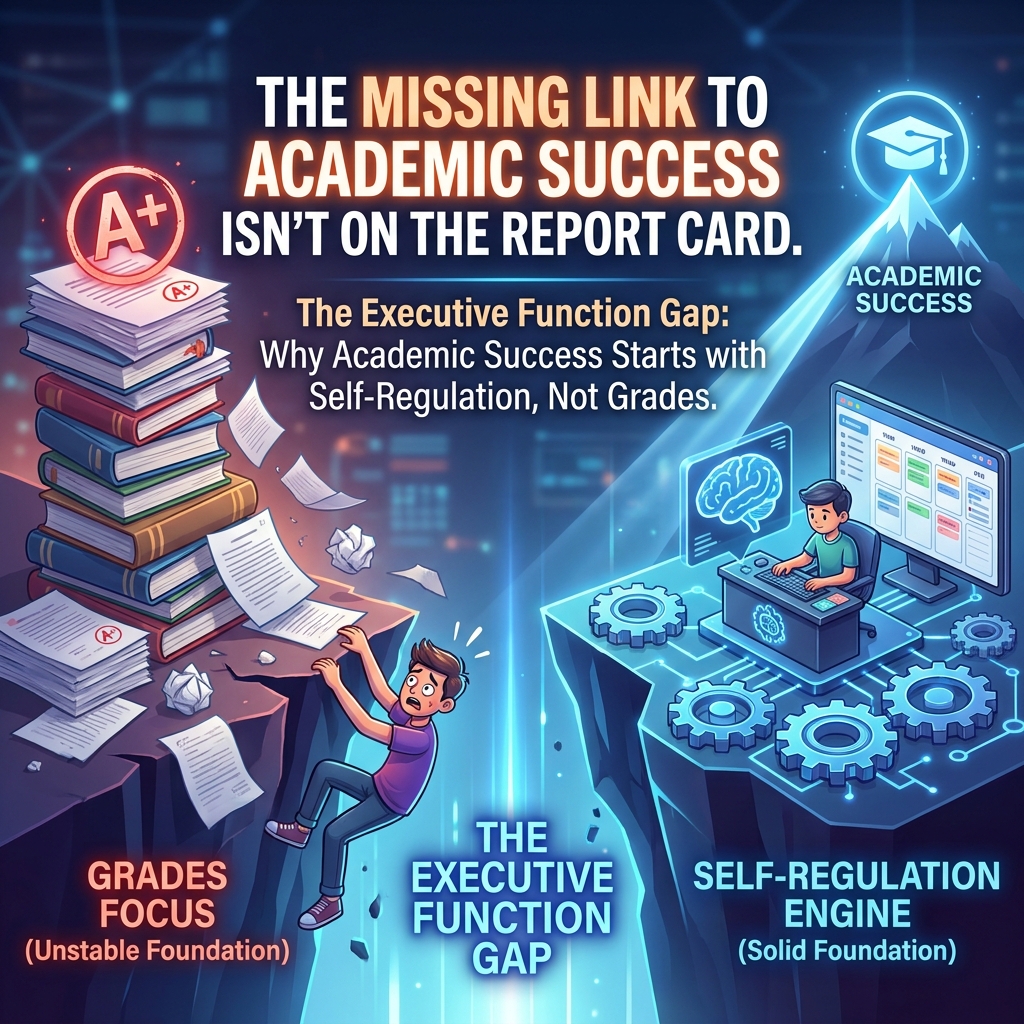
We are currently witnessing a paradox in modern education. Children have access to the most sophisticated learning tools in history, from AI tutors to interactive global platforms. Yet, teachers and developmental psychologists report a growing deficit in the foundational skills required to use those tools effectively: focus, impulse control, and mental flexibility.
This collection of mental skills is known as executive function. If the brain is a high-performance engine, executive function is the air traffic control system that prevents crashes and ensures every flight reaches its destination. Without it, even the most gifted students struggle to meet their potential. To prepare children for a future that demands constant adaptation, we must shift our focus from rote memorization to building the cognitive architecture of the mind.
Understanding the Three Pillars of Executive Function
Executive function is not a single trait; it is a suite of three distinct but interconnected cognitive processes that begin developing in early childhood and continue into the mid-twenties.
Working Memory
This is the ability to hold information in mind and mentally manipulate it. It is what allows a child to follow multi-step instructions or remember the plot of a story while reading the final chapter. When working memory is weak, kids often appear forgetful or disinterested when, in reality, they have simply run out of "cognitive RAM."
Cognitive Flexibility
Also known as mental shifting, this is the ability to sustain or shift attention in response to different demands. It allows a child to transition from a math mindset to a creative writing mindset, or to adapt when a chosen strategy for solving a puzzle fails. Building this skill is critical for cultivating cognitive agility in the age of AI education, where the ability to pivot is more valuable than static knowledge.
Inhibitory Control
This is the capacity to resist distractions and prioritize long-term goals over immediate impulses. It is the "stop and think" mechanism. Developing this skill is a core part of the toddler autonomy shift, where children begin to move from reactive behavior to intentional choices.
The Cost of the Achievement Obsession
In the rush to ensure children are "college-ready" by middle school, many parents inadvertently bypass the very skills that make college success possible. When we over-schedule and micro-manage every minute of a child's day, we take over the role of the brain's executive function.
This leads to the autonomy gap, where children become highly proficient at following directions but remain incapable of setting their own goals or managing their own time. If a child never has the opportunity to fail at a low-stakes task—like forgetting their gym shoes or managing a small weekly allowance—they never develop the neural pathways required for self-regulation. Research suggests that high-pressure environments focused solely on grades can actually impair executive function by triggering chronic stress, which shuts down the prefrontal cortex.
How to Build Executive Function at Home
Building these skills does not require expensive workbooks or specialized tutoring. It requires a shift in how we approach daily interactions and household management.
1. Implement Anchor Habits
Predictability reduces the cognitive load on a child's brain. When a child knows exactly what happens after they wake up, they don't have to use their limited "willpower" to decide what to do next. You can see how anchor habits build resilient families by creating a stable environment where executive function can flourish rather than being spent on basic survival decisions.
2. Practice Metacognition
Help your child think about their thinking. Instead of telling them to "focus harder," ask questions like: "What is your plan for this project?" or "What part of this task feels the hardest right now?" This externalizes the executive process, eventually allowing the child to internalize these prompts as self-talk.
3. Play Games That Require Inhibition
Classic games like Simon Says, Red Light Green Light, and even complex board games are excellent tools for training inhibitory control. These games force the brain to pause, evaluate the situation, and act against a primary impulse.
The Role of Psychological Safety in Learning
It is biologically impossible for a child to utilize their executive functions when they feel threatened or judged. The prefrontal cortex, the seat of executive function, is the first part of the brain to go offline during a stress response.
This is why understanding why kids can feel unsafe even around loving parents is vital for educational success. If a child is afraid of failing or being criticized, their brain stays in a "survival" state, focusing on emotional protection rather than cognitive processing. By performing a regular emotional safety audit, parents can ensure the home environment is a laboratory for learning rather than a courtroom of performance.
Encouraging Persistence Through Failure
One of the most significant barriers to executive function is the fear of being wrong. When we praise only the "A" or the "win," we reinforce the idea that the result is the only thing that matters. This often leads to a fixed mindset where kids avoid challenges to protect their image of being "smart."
We must be careful about how parents accidentally teach kids to give up by intervening too quickly when things get difficult. Instead, use the 5-second Japanese trick to allow for a moment of pause and self-correction. This brief gap gives the child the space to engage their own problem-solving skills before an adult steps in to "fix" the situation.
Moving from Control to Coaching
The transition from a parent who controls to a parent who coaches is the most effective way to foster independent learners. Coaching involves setting the boundaries but allowing the child to navigate the path within them.
For example, instead of saying "Do your homework now," a coach might say, "I see you have two hours of work and a soccer practice at 6:00. How are you going to map out your afternoon?" This forces the child to engage their working memory and planning skills. It moves the responsibility of the task from the parent to the child, which is the ultimate goal of any educational journey.
FAQ
How can I tell if my child has an executive function deficit or is just being "lazy"?
Laziness is rarely the root cause of academic struggles. Executive function deficits often look like procrastination, losing items, or emotional outbursts when tasks get difficult. If a child wants to do well but consistently fails to execute the necessary steps, it is likely a skill gap rather than a lack of motivation.
At what age should I start focusing on these skills?
Executive function begins to develop in infancy through simple games like Peek-a-boo. However, the most critical windows for development are between ages 3-5 and during the adolescent years. It is never too late to start, as the brain remains plastic well into adulthood.
Can screen time affect executive function development?
Excessive, passive screen time can potentially shorten attention spans and reduce opportunities for the "boredom" that often sparks creative problem-solving. However, high-quality, interactive educational tools can actually support cognitive flexibility if used intentionally and in moderation alongside physical play and social interaction.