Beyond the Basics: Why Your Love Language Is Actually a Fluency Problem
Discover why knowing your love language isn't enough. Learn how to master emotional fluency and bridge the communication gap in your relationship.
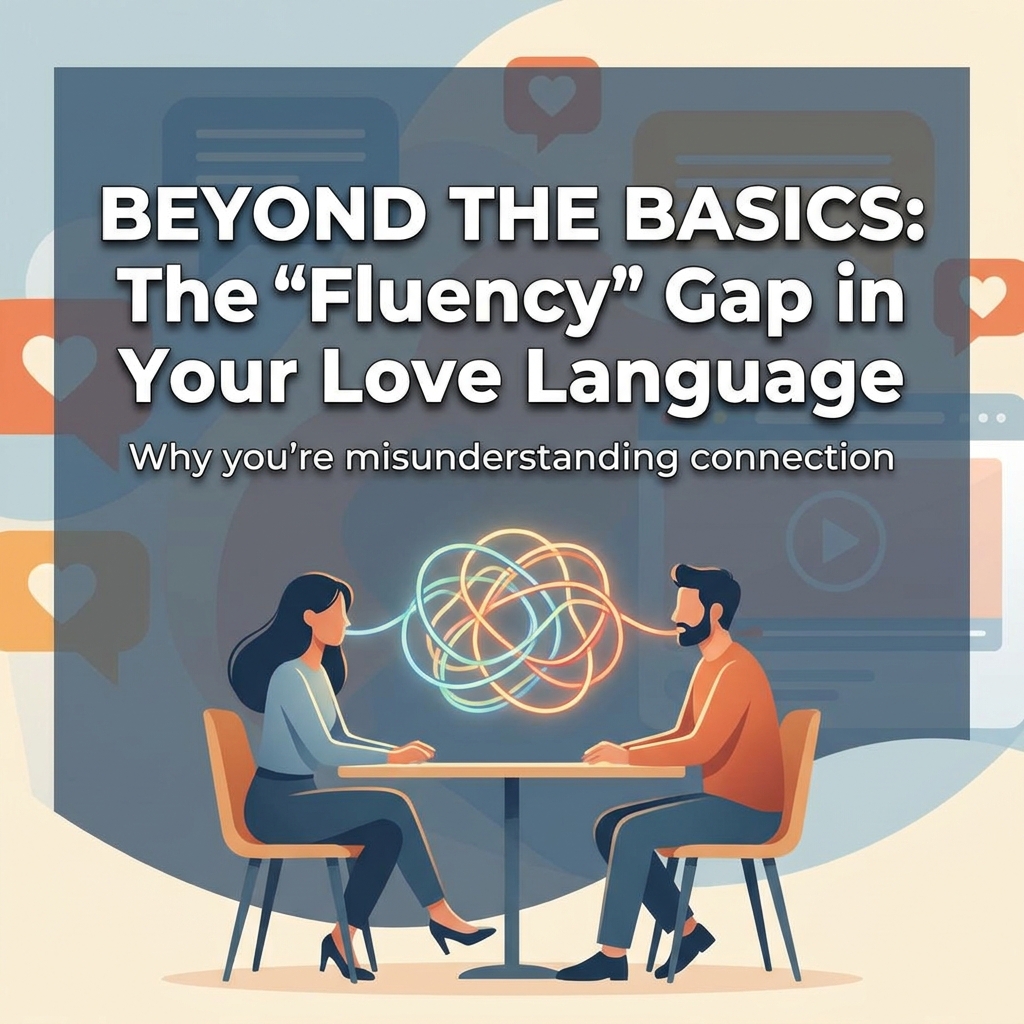
Most people can name their primary love language as easily as their zodiac sign. You likely know if you crave Words of Affirmation or if Acts of Service make you feel seen. Yet, despite this widespread awareness, modern couples are lonelier than ever. The problem isn't that we don't know our 'type'—it's that we treat love languages like a static personality trait rather than a skill to be mastered.
In 2026, the traditional five love languages have evolved. We are no longer just looking for a partner who checks a box; we are looking for a partner who can speak our specific dialect. Understanding the concept is the entry point, but true intimacy requires fluency.
The Fluency Gap: Why Knowledge Isn't Enough
You might know your partner values Quality Time, but if that time is spent scrolling on separate phones, the language is being garbled. This is what experts call the Fluency Gap. It occurs when you perform the action but miss the emotional nuance.
Fluency requires a high level of presence. Many couples struggle because they use love languages as a transactional tool rather than a bridge for connection. If you are only doing the dishes (Acts of Service) because you want a favor in return, the emotional resonance is lost. To bridge this gap, you must adopt The Intentional Dating Framework, which emphasizes strategy and conscious effort over mere luck or habit.
Moving Past the 'Big Five' Dictates
The original framework served us well for decades, but modern life has introduced new variables. Digital intimacy, remote work, and high-pressure careers have shifted how we experience affection.
Digital Acts of Service
In an era of decision fatigue, taking over the digital labor of a household—handling the grocery app, renewing the car insurance, or managing the shared calendar—is often more valuable than traditional chores. It’s about reducing the cognitive load of your partner.
The Quality Time Evolution
Quality time no longer just means dinner and a movie. It means 'unplugged' presence. If you find your partner pulling away, it might not be a lack of love, but a lack of focused attention. Understanding why she stops texting or becomes distant often leads back to a breakdown in this specific area.
The Integrity of the Language
No love language works if the foundation of the relationship is unstable. You can give all the gifts in the world, but if you consistently break your word, those gifts feel like apologies rather than affection. We call this The Integrity Debt.
Radical reliability is the silent love language that underpins all others. When you say you will do something and you follow through, you create a psychological safety net. Without this safety, Words of Affirmation sound like empty flattery, and Physical Touch can feel intrusive rather than comforting.
How to Audit Your Relationship Dialect
To move toward fluency, you need to perform regular check-ins. This isn't about a massive overhaul; it's about the small, consistent adjustments that keep a relationship healthy. This is the core of The Micro-Marriage Shift, where small habit audits prevent long-term resentment.
- The Weekly Translation Check: Ask your partner, "On a scale of 1-10, how 'filled' was your tank this week?" If the number is low, ask which specific action made them feel most loved and which made them feel most ignored.
- The Specificity Hack: Instead of generic Words of Affirmation like "You're great," try "I really appreciated how you handled that difficult call with your boss today." Specificity proves you are paying attention.
- Active Listening Over Passive Hearing: When your partner expresses a need, don't just nod. Practice High-Resolution Listening to ensure you aren't just hearing the words, but understanding the subtext and emotional weight behind them.
Navigating Mismatched Languages During Conflict
Mismatched love languages become most apparent during an argument. If your language is Physical Touch and your partner’s is Quality Time, a heated fight might leave you wanting a hug while they want to sit and talk for three hours.
Learning to bridge this gap during high-stress moments is the hallmark of a mature relationship. Utilizing The Conflict De-Escalation Framework allows you to stay connected even when you feel misunderstood. It involves acknowledging the other person’s language even if you aren't ready to speak it fluently in that exact second.
Why Distance and Space Still Matter
Counterintuitively, fluency also involves knowing when to stop talking. Even in the most connected relationships, space is a vital component of desire. Sometimes, providing space is the ultimate act of love, especially if your partner is feeling overwhelmed.
However, timing is everything. You have to give her space—but not for too long. The goal is to provide a vacuum that allows individual identity to breathe, which in turn makes the time spent together more potent. This creates a healthy dynamic where the love language isn't a suffocating obligation, but a chosen celebration.
Summary of Modern Love Language Fluency
- Words of Affirmation: Must be specific and rooted in integrity.
- Acts of Service: Focus on reducing cognitive and digital load.
- Quality Time: Defined by the absence of digital distractions.
- Physical Touch: Requires psychological safety and radical reliability.
- Receiving Gifts: Should be about the 'mental 'load' of knowing what someone needs before they ask.
By treating these not as static traits but as evolving skills, you move from a relationship that functions to one that flourishes. The goal is to become bilingual—speaking your own language for self-care and your partner’s language for connection.
FAQ: Mastering Modern Love Languages
What if my partner and I have completely opposite love languages?
This is actually very common. The key is not to change your own language, but to learn to 'translate' your partner's efforts. If they show love through Acts of Service while you crave Words of Affirmation, learn to see the clean kitchen as a 'silent' I love you. Simultaneously, communicate your need for verbal cues without making them feel inadequate.
Can your primary love language change over time?
Absolutely. Major life shifts—like a new career, parenthood, or aging—can change your emotional needs. For example, someone who valued Quality Time might shift toward Acts of Service during a high-stress period at work. Regular 'habit audits' help you stay updated on your partner’s current dialect.
How do I figure out my partner's love language if they won't take the quiz?
Observe their complaints and their own way of giving. People often complain about what they lack (e.g., "We never go out anymore" suggests Quality Time) and give what they wish to receive (e.g., if they are always complimenting you, their language is likely Words of Affirmation).