The Autonomy Gap: Why Modern Parenting Requires a Shift from Control to Coaching
Modern parenting is shifting from micromanagement to autonomy-supportive coaching. Learn how to foster self-reliance and deep trust with your child.
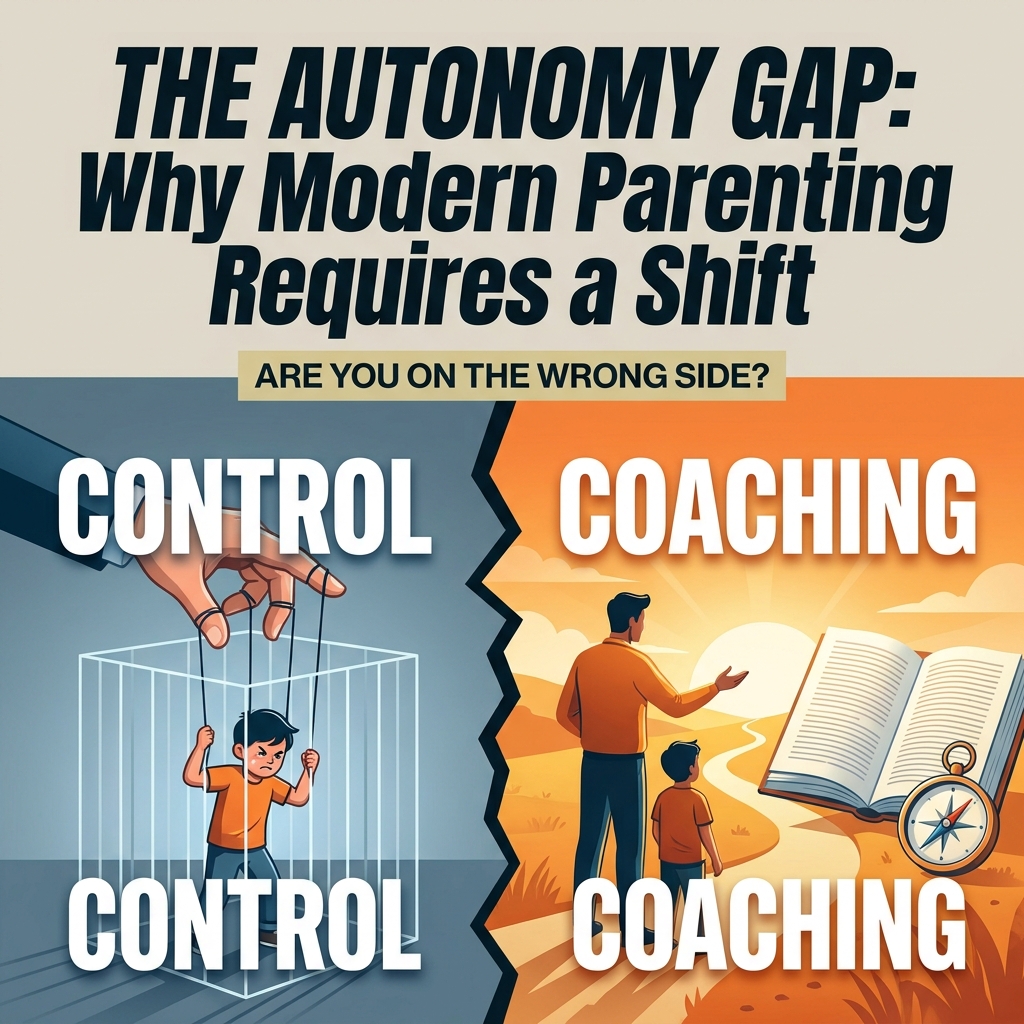
We are currently witnessing a seismic shift in the definition of a "successful" parent. For decades, the gold standard was the protector—the parent who smoothed every path and curated every experience to ensure their child never stumbled. But as we move further into 2026, the data is clear: over-protection is backfiring. We are seeing a rise in the "Autonomy Gap," a psychological distance where children possess high academic skills but lack the internal drive to navigate life's inevitable friction.
Bridging this gap requires moving away from a command-and-control model toward a coaching framework. This isn't about being a "permissive" parent; it is about being an autonomy-supportive one. It involves trading the short-term comfort of compliance for the long-term benefit of competence.
The Neuroscience of Choice and Competence
When a child feels they have a say in their life, their brain functions differently. Neurobiological research suggests that autonomy-supportive environments stimulate the prefrontal cortex, the area responsible for executive function and emotional regulation. Conversely, high-pressure, controlling environments often trigger the amygdala, leading to a fight-or-flight response that shuts down higher-level learning.
This is why traditional discipline often fails. When we rely solely on authority, we miss the opportunity to build the cognitive structures required for self-discipline. Understanding the 6 phrases that shape a child's brain for life is a critical starting point. By shifting our language from "Because I said so" to "What do you think is the best way to handle this?", we activate the child's problem-solving circuitry.
Moving from Compliance to Internal Motivation
Many parents fear that giving up control will lead to chaos. However, research into self-determination theory shows that humans have three basic psychological needs: autonomy, competence, and relatedness. When kids feel these needs are met at home, they are naturally more inclined to cooperate.
If a child feels constantly pressured, they may develop a "sneaky" persona to reclaim a sense of agency. This is a documented phenomenon; strict parenting often creates sneaky kids because the child learns to prioritize avoiding punishment over making ethical choices. By shifting to a coaching role, you remove the need for them to hide their mistakes, which is the foundation of a healthy family unit.
The Role of Micro-Routines
One of the most practical ways to foster autonomy without losing structure is through predictable systems. Instead of barking orders every morning, establish "anchor habits" that the child owns. For example, a child might be responsible for their own morning checklist. This builds a sense of mastery that translates into other areas of life. You can see how this works in practice by exploring the micro-routine manifesto: how anchor habits build resilient families.
Building Radical Trust Through Emotional Safety
Coaching is impossible without a foundation of trust. If a child fears their parent’s reaction to a failure, they will never take the risks necessary to grow. This is the core of the "Emotional Safety Audit." It involves looking at your interactions through your child's eyes. Do they see you as a safe harbor or a critical judge?
Surprisingly, even well-meaning parents can inadvertently create an environment of fear. Understanding why kids can feel unsafe even around loving parents is essential for any modern caregiver. Safety isn't just about physical protection; it’s about the freedom to be imperfect. When you conduct an emotional safety audit to build radical trust, you create a space where the child can be honest about their struggles, which is the only way you can effectively coach them through those challenges.
Practical Steps for the Parent-as-Coach
Transitioning to this style of parenting doesn't happen overnight. It requires a conscious effort to pause before reacting. Here are four actionable strategies to implement this week:
- Offer "Controlled Choices": Instead of saying "Put your coat on," ask "Do you want to put your coat on now or right before we walk out the door?" Both options lead to the same result, but the child feels a sense of agency.
- Validate the Struggle: When a child is frustrated, don't rush to fix it. Say, "That looks really hard. I can see why you're frustrated." This builds the "relatedness" component of self-determination.
- Ask, Don't Tell: Instead of giving instructions, ask curiosity questions. "What's the next step in your science project?" or "How do you plan to handle the conflict with your friend?"
- Use Natural Consequences: If a child forgets their lunch after being reminded once, let them experience the hunger (within reason). Natural consequences are much better teachers than parental lectures.
Why This Matters in the Age of AI and Rapid Change
As we look toward the future, the skills our children need are shifting. Rote memorization and simple compliance are being replaced by the need for critical thinking and adaptability. In an era where technology handles the basics, human value lies in "cognitive agility."
We must prepare our children for a world where they will need to reinvent themselves multiple times. This requires a level of grit that can't be taught through a textbook. We have to be careful not to over-help, as how parents accidentally teach kids to give up is often through intervening too early in their struggles. By stepping back, we allow them to develop the mental muscles required for cultivating cognitive agility in the age of AI education.
Navigating Sibling Dynamics and Social Complexity
Autonomy-supportive parenting also changes how we handle sibling conflict. Rather than acting as a judge and jury, a coaching parent acts as a mediator. By encouraging siblings to voice their needs and negotiate their own solutions, you decode the invisible architecture of brother-sister dynamics. This teaches them conflict resolution skills they will use for the rest of their lives, rather than teaching them that they need an external authority to solve their problems.
Conclusion: The Long Game
The goal of parenting isn't to raise a "good kid" who follows every rule; it's to raise a competent adult who can make their own rules based on a solid internal compass. It requires us to be brave enough to watch them fail and wise enough to be there to help them process that failure without shame. By bridging the autonomy gap today, we ensure our families remain a relevant, supportive cornerstone of society, reflecting the importance of family in 2026 and beyond.
FAQ
How do I start giving my child more autonomy if they are used to me doing everything?
Start small. Pick one area, like getting dressed or managing their homework schedule, and hand over the reins entirely. Expect a few mistakes at first—that's part of the learning process. Use the "coach" mindset to ask how they think they can improve the process next time.
What if my child makes a choice that is genuinely bad or dangerous?
Autonomy-supportive parenting is not about letting kids do whatever they want. It operates within a framework of safety and core values. You provide the "guardrails," but let them steer the car within those lanes. If a choice is dangerous, you intervene firmly but explain the "why" behind the boundary.
Does this approach work for toddlers, or just older children?
It works for all ages! Even a toddler can choose between two different snacks or decide which book to read before bed. The earlier you start fostering these small moments of agency, the more naturally your child will handle larger responsibilities as they grow.