The Cortisol Calibration: Rewiring Your Stress Response for High-Stakes Focus
Stop trying to eliminate stress and start mastering it. Learn how to calibrate your cortisol levels for peak cognitive performance and long-term health.
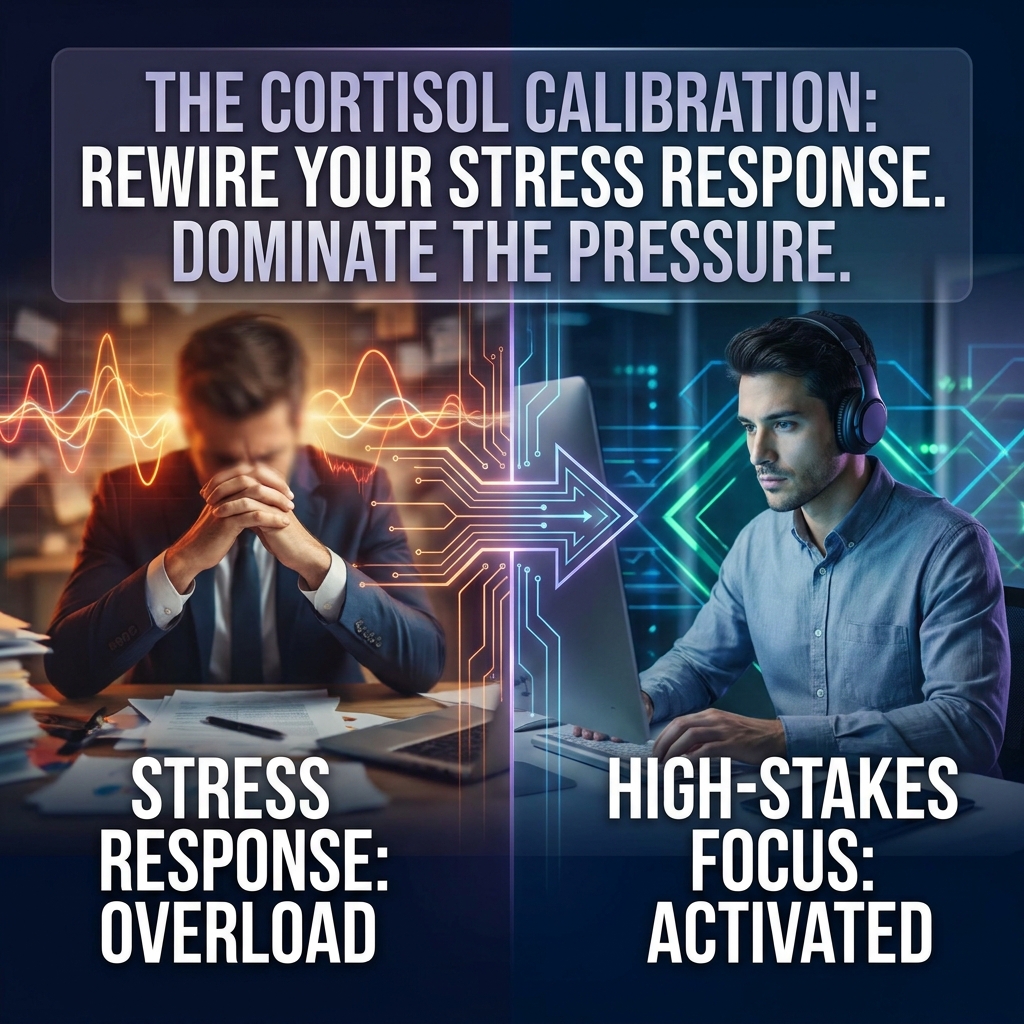
We have been sold a lie about stress. For decades, wellness culture has treated stress as a toxin to be purged, a binary enemy that must be eliminated through bubble baths and silent retreats. But the biological reality is far more nuanced. Stress is not a bug in the human operating system; it is a feature designed for mobilization. The problem modern professionals face isn't the presence of stress, but the inability to turn it off.
When your body remains in a state of perpetual high-alert, your cortisol levels—the primary stress hormone—never return to baseline. This creates a phenomenon known as allostatic load, the wear and tear on the body that accumulates when you are exposed to repeated or chronic stress. To thrive in a high-pressure environment, you don't need less stress; you need better stress calibration.
The Science of Cortisol Calibration
Cortisol follows a natural rhythm. Ideally, it peaks in the morning to wake you up and gradually declines throughout the day to allow for sleep. When this rhythm is disrupted, you experience the "tired but wired" phenomenon. You struggle to focus during the day and can’t shut your brain off at night.
Calibrating your stress response starts with mastering your biological clock. Research shows that early morning light exposure is the most effective way to set your cortisol peak at the right time. By syncing your internal rhythms, you ensure that your body’s energy production aligns with your cognitive demands. This is why The Biological Clock Reset: How to Optimize Your Morning for Circadian Health is so fundamental to modern stress management. Without this foundation, any other supplement or breathing technique is merely a band-aid.
Shifting from Chronic Stress to Hormetic Stress
Not all stress is created equal. Chronic stress is corrosive, but hormetic stress—short, deliberate bursts of intense pressure—is actually strengthening. Think of it like weightlifting for your nervous system. By exposing yourself to controlled stressors, you increase your resilience to the uncontrolled stressors of daily life.
Examples of beneficial hormetic stress include:
- Cold Exposure: A 60-second cold shower triggers a surge in norepinephrine, sharpening focus.
- High-Intensity Interval Training (HIIT): Brief bouts of intense physical effort improve cardiovascular efficiency.
- Deep Work Sprints: 90 minutes of uninterrupted, high-cognitive demand work followed by total rest.
To support these intense bursts, your body requires metabolic stability. If your blood sugar is a roller coaster, your stress response will be too. Developing metabolic flexibility: the science of training your body to burn fat and carbs allows your brain to maintain steady energy levels even when the pressure mounts, preventing the "hangry" irritability that often accompanies a stressful workday.
The Neurological Reset: Moving Beyond Symptom Management
Most people wait until they are burnt out to address their stress. This reactive approach is inefficient. Instead, we should adopt a proactive framework that treats the nervous system as a dynamic asset. This is the core of The Preventive Care Pivot: Shifting from Symptom Management to Longevity Systems.
To move from reactive to proactive, implement the "Low-Stimulus Window." Our brains are constantly bombarded by notifications, dopamine loops, and digital noise. This constant input keeps the sympathetic nervous system (fight or flight) activated. By scheduling a low-stimulus reset, you allow your parasympathetic nervous system (rest and digest) to take the lead. This isn't just about relaxation; it's about clearing the neurological cache so you can return to high-level decision-making with clarity.
Practical Steps for Daily Stress Resilience
Calibration isn't a one-time event; it's a series of small, intentional choices. If you are a high-performer, your goal should be to maximize your "dynamic range"—the ability to go from 100% intensity to 0% relaxation quickly.
1. Optimize Your Cellular Environment
Stress is dehydrating. When you are under pressure, your brain consumes more resources, including electrolytes and water. However, chugging plain water isn't enough. Effective stress management requires understanding cellular hydration strategies for optimal health. Proper mineral balance ensures that your neurons can fire efficiently, preventing the brain fog that often triggers a stress spiral.
2. Practice Strategic Disconnection
Modern stress is often exacerbated by the feeling of being "always on." This is particularly true for those managing complex careers or remote lifestyles. If you find yourself unable to detach from work, consider how small lifestyle changes for better health can create digital boundaries. This might mean leaving your phone in another room during dinner or using a dedicated device for work and leisure.
3. Leverage Nutrient Density
When cortisol is high, the body craves quick energy—usually in the form of processed sugar. This creates a cycle of inflammation that further stresses the system. Shifting toward a diet focused on nutrient density and timing provides the raw materials needed for neurotransmitter production, such as magnesium and B vitamins, which act as natural buffers against the physiological effects of stress.
The Role of the Gut-Brain Axis
We cannot discuss stress without mentioning the gut. About 90% of the body's serotonin is produced in the digestive tract. A compromised microbiome translates directly to a compromised mood and a heightened stress response. Chronic stress actually changes the composition of your gut bacteria, making you more susceptible to anxiety. Breaking this cycle requires building resilient microbiomes through dietary diversity. By feeding the beneficial bacteria in your gut, you are essentially fortifying your brain’s ability to handle external pressure.
Summary of the Calibration Framework
To recap, mastering your stress response involves three pillars:
- Alignment: Use light and routine to sync your cortisol with your natural circadian rhythm.
- Challenge: Use hormetic stress (cold, heat, intensity) to build nervous system resilience.
- Recovery: Use low-stimulus environments and nutrient-dense fuel to allow the system to reset.
Stress is not something to be feared. It is a powerful source of energy when properly directed. By shifting your perspective from "stress reduction" to "stress calibration," you reclaim control over your biology and your performance.
FAQ
How do I know if my cortisol is out of balance?
Common signs include waking up feeling exhausted despite getting eight hours of sleep, experiencing a "second wind" of energy late at night, and carrying weight specifically around the midsection. If you feel irritable or lightheaded when you haven't eaten for a few hours, your stress-response system may be struggling to maintain metabolic balance.
Can supplements fix a high-stress lifestyle?
Supplements like ashwagandha, magnesium, and L-theanine can be helpful tools, but they cannot override a lifestyle that ignores basic biological needs. Think of supplements as the "fine-tuning" that only works once you have established a solid foundation of sleep, hydration, and light exposure.
Is all stress really 'good' if it's short-term?
Short-term stress is beneficial only if it is followed by a period of recovery. The danger of modern life is that we face a series of "micro-stressors"—an email, a traffic jam, a social media comment—that never allow the body to return to a baseline of safety. The goal is to ensure your periods of activation are balanced by periods of deep physiological rest.