The Preventive Care Pivot: Shifting from Symptom Management to Longevity Systems
Stop waiting for symptoms. Learn how to build a preventive care system that identifies health risks before they become chronic issues.
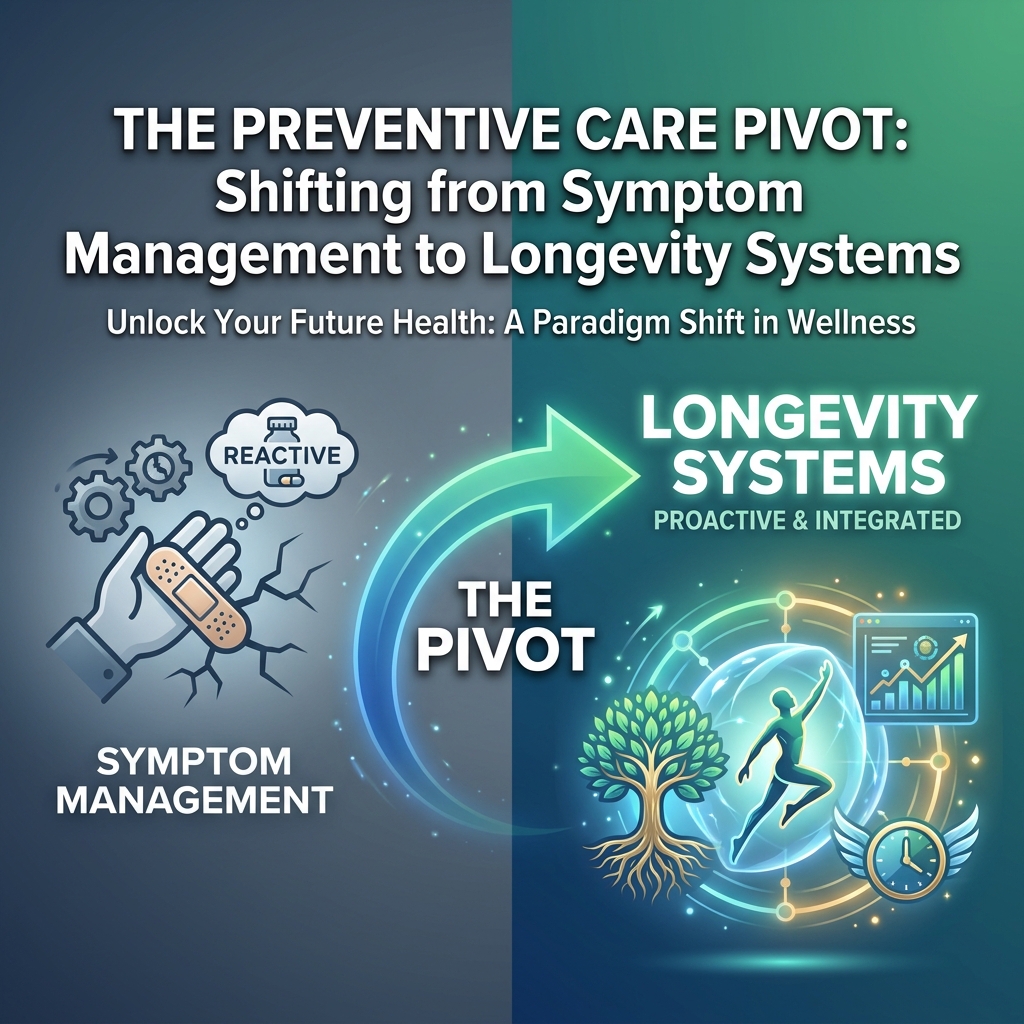
Most people treat their health like a car that only visits the mechanic when the engine is smoking. In the traditional medical model, we are conditioned to wait for a symptom—a pain, a lump, or a sudden bout of fatigue—before seeking professional advice. But by the time a symptom manifests, the underlying pathology has often been developing for years, if not decades.
Preventive care is the strategic shift from being a passenger in your own biology to being the lead engineer. It is not just about getting an annual physical; it is about building a robust system of biomarkers, lifestyle interventions, and early screenings that act as a high-tech radar for your body. If you want to avoid becoming a statistic, you need to understand that health isn't the absence of disease—it's the active maintenance of physiological resilience.
The Architecture of Proactive Health
Modern preventive care rests on three pillars: early detection, metabolic stability, and lifestyle architecture. The goal is to identify "silent" risks before they escalate. For example, many individuals believe that being physically active exempts them from cardiovascular risk. However, why even fit people are at risk of a heart attack often comes down to genetic predispositions or hidden inflammatory markers that exercise alone cannot suppress.
To build a proactive system, you must move beyond the standard blood panel. A standard fasting glucose test might look normal, but your insulin levels could be skyrocketing to keep it that way. This is why understanding metabolic flexibility is critical. Training your body to switch efficiently between burning fats and carbohydrates is a primary preventive measure against Type 2 diabetes and metabolic syndrome.
Screening Beyond the Basics
If you are only getting the screenings your insurance company mandates, you are likely missing the full picture. Preventive care in 2026 involves looking for the "quiet" signs of decline. Cardiovascular health is a prime example. Heart disease doesn't happen overnight; it is a slow process of endothelial dysfunction and plaque accumulation. Understanding how your heart slowly starts to fail allows you to intervene with lipid-lowering strategies or dietary changes years before a major event occurs.
Advanced Biomarkers to Track
- ApoB (Apolipoprotein B): A more accurate predictor of cardiovascular risk than standard LDL cholesterol.
- Lp(a): A genetically determined protein that increases blood clot and stroke risk.
- Hs-CRP: A marker of systemic inflammation.
- Cystatin C: A more sensitive measure of kidney function than creatinine.
By tracking these, you can spot the silent warning signs of a blood clot or arterial stiffness long before they require emergency intervention.
The Role of Circadian Biology in Prevention
We often think of preventive care as pills or procedures, but one of the most powerful tools is the regulation of your internal clock. Chronic circadian disruption is linked to increased cancer risk, obesity, and cognitive decline. Implementing a biological clock reset by getting natural sunlight within 30 minutes of waking helps regulate cortisol and melatonin production.
This isn't just about feeling awake; it's about cellular repair. When your circadian rhythm is aligned, your body can effectively perform autophagy—the process of clearing out damaged cells. This is a fundamental preventive mechanism against neurodegenerative diseases and certain types of cellular mutations.
Nutrients as Preventive Medicine
Supplementation should never replace a whole-food diet, but specific nutrients play outsized roles in long-term health. Vitamin D, for instance, acts more like a hormone than a vitamin, influencing thousands of gene expressions. Understanding what Vitamin D really does to your body is essential for immune surveillance and bone density. Low levels are consistently linked to higher all-cause mortality, making it a cornerstone of any preventive protocol.
Hydration is another overlooked factor. Most people focus on volume, but the quality of that hydration dictates how well your cells communicate. Transitioning to cellular hydration strategies ensures that electrolytes and minerals are actually reaching the intracellular space, which supports detoxification and energy production.
Practical Steps for Your Preventive Roadmap
Transitioning to a preventive mindset doesn't require an overnight overhaul. It requires the compounding effect of small lifestyle changes for better health that reduce systemic stress over time.
- Audit Your Family History: Knowledge is power. If your family has a history of early-onset stroke or specific cancers, your screening schedule should be more aggressive than the general population's.
- Monitor Blood Pressure at Home: Clinical "white coat" hypertension is common. Taking your own readings in a relaxed state provides a more accurate baseline of your vascular health.
- Prioritize Strength Training: Sarcopenia (muscle loss) is a leading indicator of frailty and metabolic dysfunction in later life. Resistance training is a form of preventive medicine for your skeletal and endocrine systems.
- Focus on Gut Health: The microbiome is the gatekeeper of the immune system. A diet high in diverse fibers prevents the systemic inflammation that leads to chronic disease.
The Psychological Shift: Health as an Asset
Ultimately, preventive care requires shifting your perspective of health from a "given" to an "asset" that requires active management. We spend hours managing our financial portfolios but often neglect the biological portfolio that allows us to enjoy our wealth. By adopting a daily wellness routine for busy people, you ensure that health maintenance becomes a background process rather than a crisis-response task.
Preventive care is the ultimate insurance policy. It is the art of dying young as late as possible by ensuring that your healthspan matches your lifespan.
Frequently Asked Questions
When should I start focusing on preventive care?
Ideally, in your 20s or 30s. While it is never too late to start, the compounding benefits of low inflammation and stable blood sugar are greatest when initiated early. This prevents the cumulative damage that leads to chronic conditions in your 50s and 60s.
Are expensive "executive physicals" worth it?
They can be, but you can achieve 90% of the results by working with a forward-thinking primary care physician to order specific labs like ApoB, Vitamin D, and fasting insulin. The value lies in the data and the action plan derived from it, not just the price tag.
Can lifestyle really prevent genetic diseases?
While you cannot change your DNA, you can influence gene expression through epigenetics. Lifestyle factors like sleep, diet, and stress management act as "switches" that can keep problematic genes dormant while promoting the expression of longevity genes.