The Anti-Fragile Portfolio: Mastering Asset Allocation in a High-Volatility Era
Stop chasing returns and start building resilience. Learn how modern asset allocation protects your wealth against market shocks while capturing hidden growth.
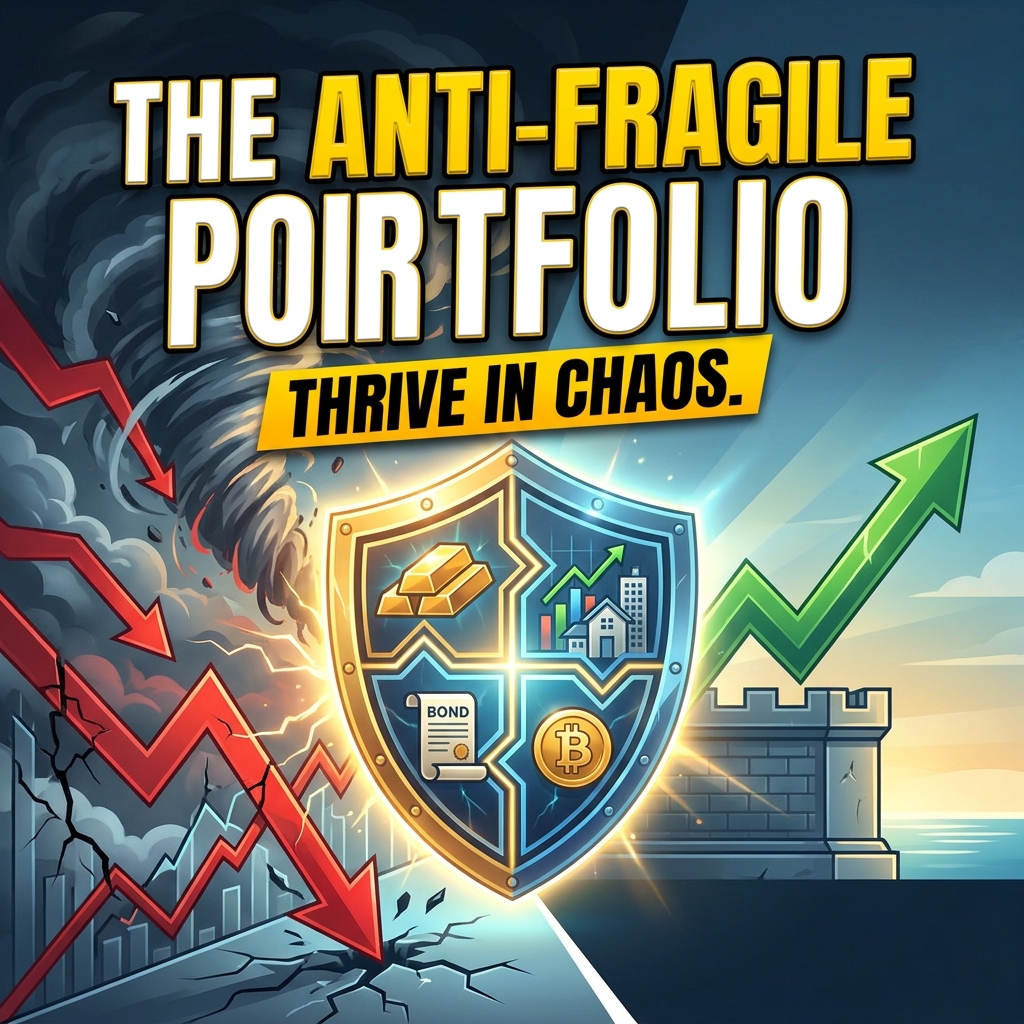
If you spent the last decade following the classic advice of "buying the dip" and holding a standard 60/40 split of stocks and bonds, you likely felt invincible. But as we navigate the mid-2020s, that invincibility has been replaced by a nagging uncertainty. Inflation isn't just a headline; it's a structural reality. Interest rates are no longer anchored to zero. Markets that used to trend upward in a straight line now spend months—or years—chopping sideways.
Traditional asset allocation was designed for a world that no longer exists. To grow your net worth today, you need more than just a collection of tickers. You need an anti-fragile framework: a strategy that doesn't just withstand stress but actually benefits from it. This is how you move from being a passive participant in the market to an architect of long-term wealth.
The Breakdown of the Traditional 60/40 Model
For nearly forty years, the 60/40 portfolio was the gold standard. When stocks crashed, bonds acted as a safety net. This worked because inflation was low and interest rates were falling. However, in the current economic climate, we’ve seen stocks and bonds fall in tandem, destroying the "diversification" investors thought they had.
Modern wealth management requires a shift toward a dynamic asset allocation framework. Instead of a static percentage that you set and forget, you must view your portfolio as a living organism. This involves looking beyond public equities and government debt toward assets that have low correlation with the S&P 500.
Consider the "Lost Decade" of the early 2000s or the choppy waters of the mid-2020s. When the broad market indices stagnate, your success depends on your ability to navigate the psychology of a sideways market. In these periods, asset allocation isn't about picking the next moonshot; it's about ensuring your capital is positioned to capture yield from diverse sources while minimizing drawdown.
Building the Four Pillars of Modern Allocation
To build an anti-fragile portfolio, you should categorize your holdings into four distinct functional pillars. This goes beyond the simple "growth vs. value" debate and focuses on how assets behave under pressure.
1. The Core Growth Engine
This remains the foundation of most portfolios: low-cost index funds and total market ETFs. However, rather than just domestic large-cap stocks, a modern growth engine includes global exposure. The goal here is to capture the long-term upward trajectory of human innovation and productivity.
2. Inflation-Linked Real Assets
In a world of currency fluctuations, owning "stuff" is as important as owning "paper." This includes commodities, infrastructure, and real estate. We are seeing a massive shift in how people invest in brick-and-mortar. If you aren't ready to buy a commercial building, you can utilize adaptive real estate strategies to gain exposure to high-demand sectors like data centers or cold storage through REITs or specialized funds.
3. Alternative Income Streams
Yield is no longer restricted to the 2% dividend yield of a legacy blue-chip stock. Modern investors are looking toward private credit, peer-to-peer lending, and even digital assets that provide staking rewards. Even for those starting with smaller capital bases, fractional share investing and compounding allow for the same level of sophisticated diversification that was once reserved for institutional investors.
4. The Volatility Hedge
This is the "anti-fragile" component. It includes cash equivalents, gold, or inverse ETFs that perform well when the rest of the market is in chaos. The goal isn't to time the market, but to have dry powder available when valuations become attractive.
The Strategic Importance of Rebalancing
Asset allocation is not a one-time event; it is a process. Over time, your winners will grow to represent too much of your portfolio, increasing your risk. Your losers will shrink, potentially leaving you underweight in an area poised for a rebound.
Strategic rebalancing is the only "free lunch" in investing. By selling a portion of your outperformers to buy more of your underperformers, you are systematically forcing yourself to buy low and sell high. This requires a level of emotional discipline that most retail investors lack. It is similar to a strategic frugality framework—it’s not about deprivation, but about the intentional movement of resources to where they provide the most long-term value.
Integrating Alternative Assets Without the Risk
Many investors shy away from "alternatives" because they associate them with high risk or complexity. However, the risk often lies in the lack of a system, not the asset itself. Just as you might use an identity shift for habit design to improve your personal life, you must adopt the identity of a risk manager when dealing with alternatives.
Start by allocating no more than 5-10% of your total portfolio to high-volatility alternatives. This allows you to benefit from the massive upside potential (the "convexity") without risking your financial survival if the asset goes to zero. The key is to ensure these assets are truly uncorrelated. If your "alternative" is just a tech-heavy crypto fund, it may move in lockstep with the Nasdaq, providing no real diversification benefit.
Actionable Steps to Audit Your Current Allocation
- Calculate Your Correlation: Look at your top five holdings. Do they all move together? If you own Apple, Microsoft, and a QQQ ETF, you aren't diversified; you are concentrated in Big Tech.
- Assess Your Liquidity: How much of your net worth can you access within 48 hours without taking a massive loss? Ensure you have a "liquidity bucket" to cover 6-12 months of expenses.
- Define Your Rebalancing Triggers: Don't rebalance based on your mood. Set a calendar date (e.g., every six months) or a percentage trigger (e.g., when an asset moves 5% away from its target weight).
- Optimize for Taxes: Ensure your most tax-inefficient assets (like high-yield bonds or REITs) are held in tax-advantaged accounts like an IRA or 401(k) whenever possible.
The Psychology of Staying the Course
The greatest threat to your asset allocation isn't a market crash—it’s your own behavior. When the headlines are screaming and your portfolio is red, the temptation to "do something" is overwhelming. This is where the anti-fragile mindset pays off. By knowing you have protected your downside through intentional allocation, you gain the mental clarity to stay invested when others are panicking.
Wealth is built through the accumulation of small, correct decisions over decades. By moving away from the fragile models of the past and embracing a diversified, dynamic approach, you aren't just hoping for a better future—you are engineering it.
Frequently Asked Questions
How often should I change my asset allocation?
Your target allocation should only change if your life circumstances change (e.g., getting closer to retirement, a major career shift, or a change in risk tolerance). However, you should rebalance back to those targets at least once or twice a year to maintain your risk profile.
Is real estate still a good diversifier in 2026?
Yes, but the "how" has changed. Traditional residential landlording faces higher costs and regulatory hurdles. Modern investors are looking toward adaptive real estate and fractional platforms that allow for more liquid and diversified property exposure without the headaches of direct management.
What is the biggest mistake in asset allocation?
The most common mistake is "recency bias"—assuming that the assets that performed best over the last three years will continue to do so. This leads investors to buy at the top and ignore undervalued sectors that are actually positioned for the next cycle of growth.