The Rise of Adaptive Real Estate: How to Build a Modern Property Portfolio for the Flex-Economy
Traditional landlordism is evolving. Discover how adaptive real estate strategies like medium-term rentals and fractional ownership are redefining wealth in 2026.
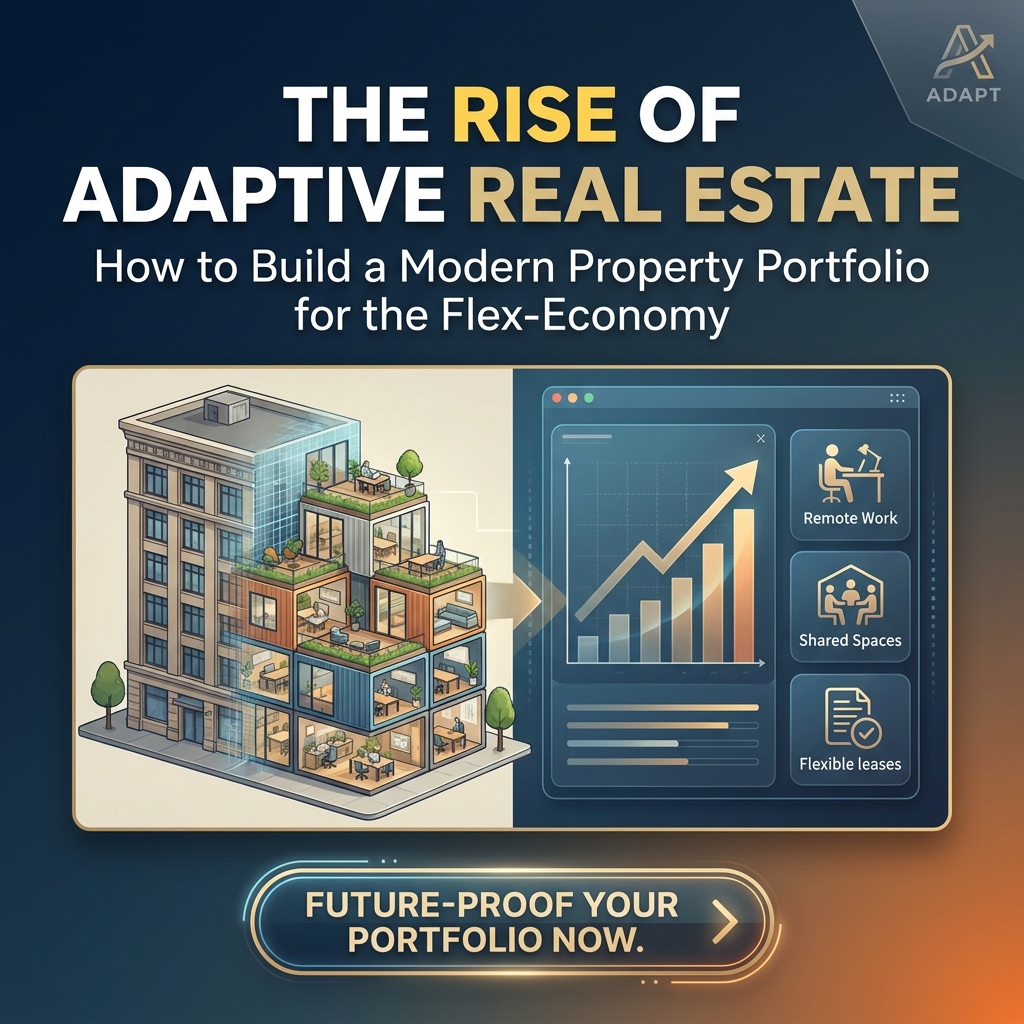
The old dream of buying a single-family home, finding a twenty-year tenant, and watching the equity grow has met a new reality. High interest rates, shifting work culture, and a global housing shortage have turned traditional landlording into a low-margin headache for many. However, wealth is not disappearing from the property market; it is migrating toward a strategy known as adaptive real estate.
Adaptive real estate is the practice of purchasing or managing property with the specific intent to toggle between different use cases based on market demand. It is the end of the 'set it and forget it' era. Today, successful investors are looking at properties not just as shelter, but as flexible assets that can serve digital nomads, corporate relocations, or even fractional owners. This approach mirrors the agility required in other financial sectors, much like the psychology of the sideways market, where growth comes from strategy rather than just riding a broad upward trend.
The Shift to Medium-Term Rentals (MTRs)
For years, the market was split between long-term leases and the high-turnover world of short-term vacation rentals. Both have significant drawbacks in the current economy. Long-term rentals often struggle to keep pace with inflation, while short-term rentals face increasing municipal crackdowns and 'Airbnb fatigue.'
Enter the medium-term rental (MTR). These are typically stays lasting between 30 days and six months. The target demographic includes traveling nurses, remote workers, and people in the middle of a home renovation.
Why MTRs are the Sweet Spot
- Higher Yields: You can typically charge 1.5x to 2x the long-term market rate.
- Regulatory Resilience: Most cities that ban short-term rentals still allow 30-day minimum stays.
- Lower Maintenance: Unlike vacationers, MTR tenants treat the space like a home, leading to less wear and tear.
To succeed here, you need to curate an environment that supports productivity. This means high-speed internet, ergonomic workspaces, and a neighborhood feel. It is about more than just a bed; it is about providing a temporary lifestyle. Just as people are finding that small lifestyle changes for better health lead to long-term gains, small upgrades to a property’s utility can exponentially increase its monthly cash flow.
Fractional Ownership and Direct Participation
Many potential investors feel locked out of real estate due to the massive down payments required in 2026. However, the democratization of property ownership has arrived through fractional platforms. This isn't the timeshare trap of the 1990s; it is the ability to own a verified percentage of a specific deeded property.
By spreading $10,000 across ten different properties in different geographic markets, you achieve a level of diversification that was previously reserved for institutional REITs. This methodology aligns perfectly with the new era of fractional compounding, allowing you to build a high-yield portfolio with smaller, more manageable capital outlays.
This 'micro-investing' in real estate reduces the risk of a single vacancy ruining your monthly cash flow. It also allows you to test different markets—investing in a tech hub one month and a sunshine-belt retirement community the next—without the logistical nightmare of physically managing properties across the country.
The Multi-Generational Conversion Strategy
One of the most stable ways to build real estate wealth today is by addressing the 'missing middle' of housing. Many large, older single-family homes are no longer practical for the average modern family. Adaptive investors are looking at these properties for Accessory Dwelling Unit (ADU) potential or converting them into duplexes.
Adding an ADU (often called a granny flat or garden suite) can increase a property's value by 20-30% while providing an entirely separate stream of rental income. This strategy is particularly effective in high-density urban areas where land is more valuable than the structure sitting on it.
Building wealth through property conversion requires patience and a systematic approach. It is not unlike establishing a healthy morning routine for energy; the results are not overnight, but the cumulative effect of structured, daily progress creates a foundation that is difficult to shake. You are essentially manufacturing equity through utility.
Navigating the 2026 Tech Integration
Smart home technology is no longer a luxury; it is a baseline requirement for the modern tenant. If your property isn't 'smart,' it is depreciating faster than you think. This goes beyond a smart thermostat.
Modern property management involves:
- Keyless Entry: Essential for managing MTRs and maintenance crews remotely.
- Energy Monitoring: Helping tenants (and owners) reduce utility costs through automated lighting and HVAC.
- Preventative Sensors: Leak detectors that can shut off water values automatically, saving thousands in potential insurance claims.
Investors who integrate these technologies are finding that their properties command a premium. People are willing to pay for the peace of mind and convenience that comes with a tech-forward home. It is about creating a 'daily wellness routine' for the building itself, ensuring it operates at peak efficiency. For those interested in how these systems mirror personal optimization, looking into a daily wellness routine for busy people can provide insights into the logic of automation and preventative care.
Financial Discipline and Exit Strategies
No matter how 'adaptive' your strategy is, the math must work. In a high-interest environment, the '1% rule' (where monthly rent should equal 1% of the purchase price) is harder to find. This means you must be more diligent about your debt-to-income ratios and your cash reserves.
An adaptive investor always has three exit strategies for any property:
- The Cash-Flow Exit: Can this property sustain itself as a traditional long-term rental if the MTR market dips?
- The Value-Add Exit: Can I renovate and sell to an owner-occupant for a capital gain?
- The Creative Exit: Can I sell the property via seller financing to earn interest on the equity without the headaches of management?
By having multiple ways to win, you insulate yourself against market volatility. Real estate is a marathon, not a sprint. Success comes to those who can pivot when the economic weather changes.
FAQ: Modern Real Estate Investing
Is real estate still a good investment with high interest rates?
Yes, but the strategy must change. You can no longer rely on cheap debt to fix bad math. Focus on properties with high 'intrinsic utility'—meaning they are in locations where people must live for work or school—and look for ways to increase income through medium-term rentals or ADUs rather than just waiting for price appreciation.
How much do I really need to start in 2026?
While a traditional 20% down payment on a house might be $100,000+, fractional investing platforms allow you to start with as little as $1,000. For those looking to own physical property, 'house hacking'—buying a multi-unit property, living in one unit, and renting the others—remains the most effective way to start with a low down payment (often as low as 3.5% through government-backed loans).
What is the biggest risk in adaptive real estate?
Regulatory change is the primary risk. Cities can change their zoning laws or rental restrictions overnight. To mitigate this, always ensure your property is 'market-agnostic,' meaning it can still turn a profit (or at least break even) as a standard long-term rental if your primary strategy (like MTR or Airbnb) becomes illegal or oversaturated.